

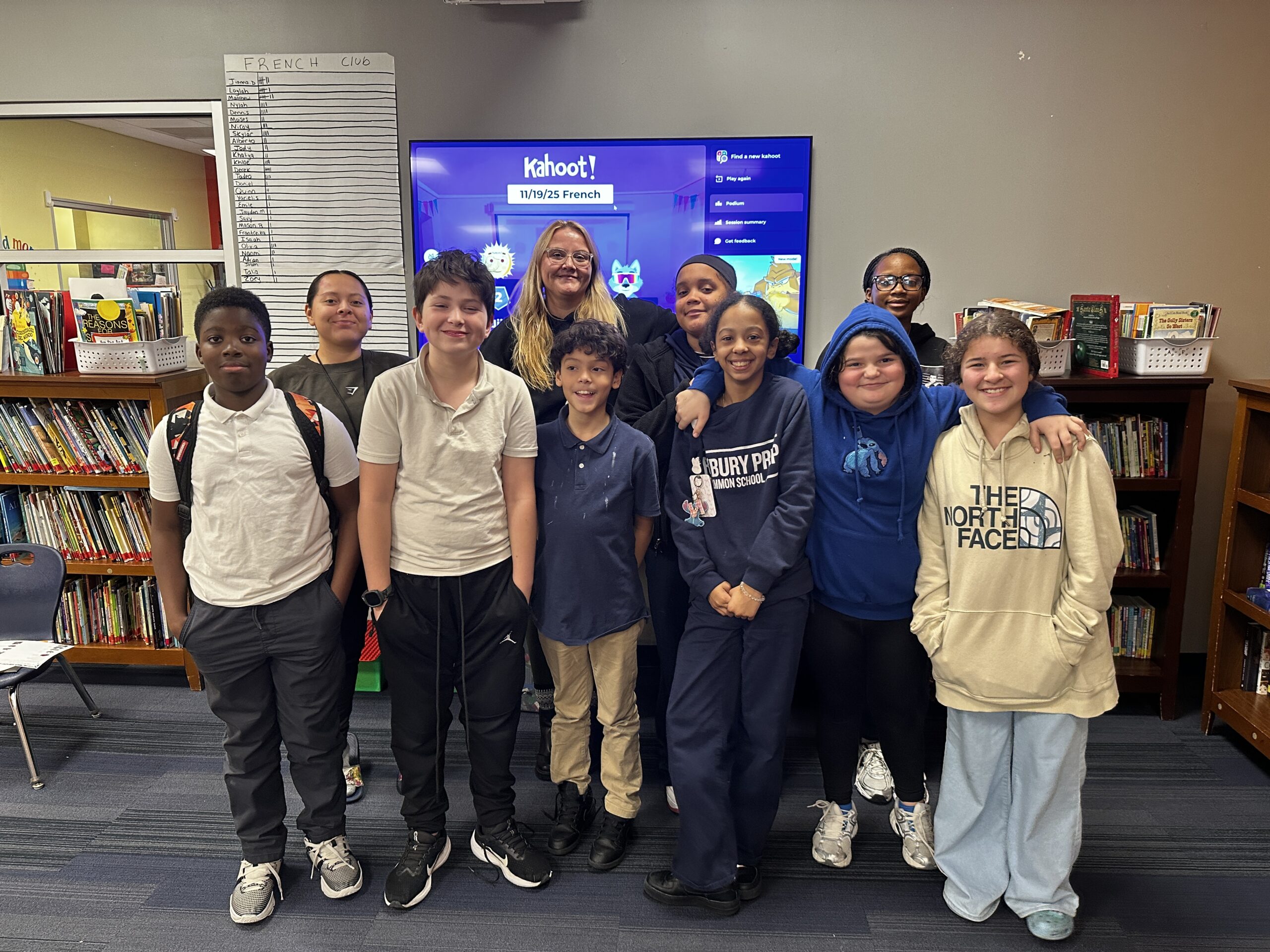
If you ever want to see curiosity come alive, step into the Edgerley Family South Boston Club on a Monday or Wednesday evening. Before you even reach the door, you can hear it. The layered sound of young people laughing, calling out answers, and trying their best to wrap their tongues around French phrases.
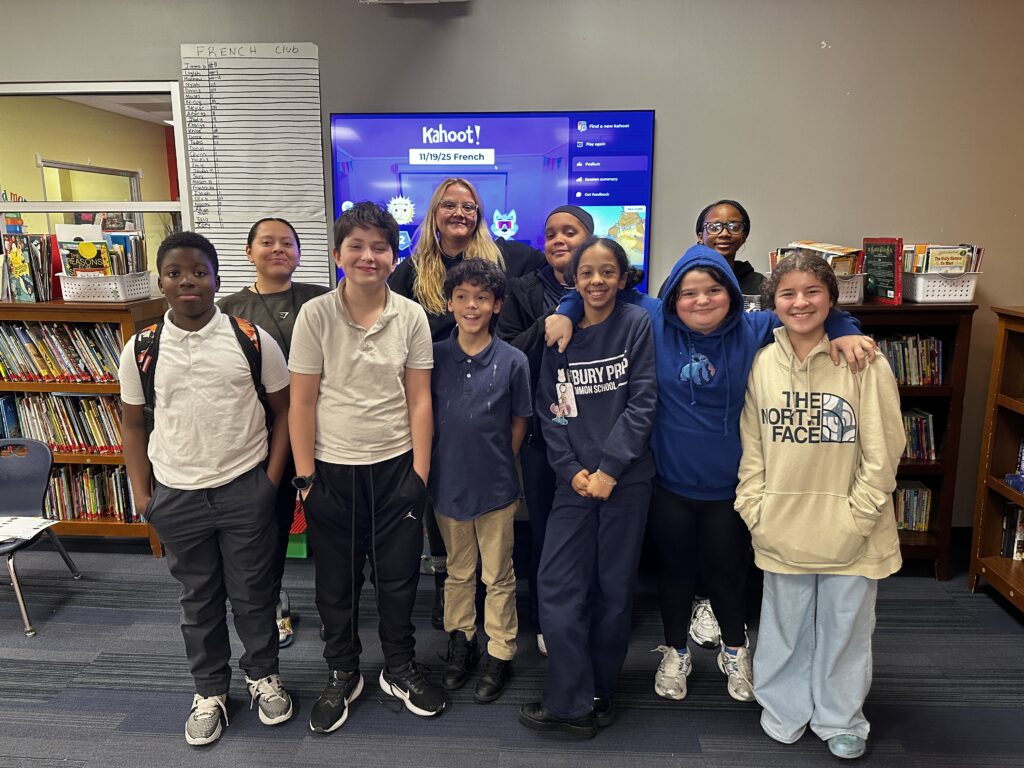
The French Club has become one of the most joyful corners of the building, and it shows from the moment class begins. Chairs scrape forward. Members lean in. Someone shouts “cinquante cinq” with complete conviction, and the whole room erupts. It is loud, happy, and full of energy. A heated Kahoot match lights up the screen, and young people crowd around each other to whisper answers and celebrate small victories. But if you listen closely, you hear something deeper happening. You hear beginners trying out new sounds. You hear returning students helping first timers get the rhythm down. You hear students switching between English and French with surprising ease.
And you see something rare: a room full of young people who choose to stay. They could be in the gym or the art room. They could be downstairs with friends. But they are here. They are learning something new and having a good time doing it.
The Power of a Great Teacher
At the center of it all is Braidie Connors, the Club’s education program manager and the heart behind this growing program. Braidie has been with BGCB for 11 years, watching generations of young people grow from energetic six-year-olds into college-bound young adults. As someone who fell in love with travel through her own eighth-grade trip to Quebec, she understands something crucial. Language learning isn’t just about vocabulary and grammar. It is about opening windows to the world.
“I think it gives you the confidence to explore more,” Braidie explains. “You know you can do this one thing or you’ve had this one experience, you’re less afraid of it. It’s not as intimidating.”
Her approach is equal parts structure and spontaneity. One moment she is leading a lesson, the next she is crouched beside a table cheering on a student who surprised herself by pronouncing a new phrase correctly.
Her enthusiasm fills the room. The members mirror it. They challenge themselves because she believes they can. And they try without fear because she makes it safe to be unsure, safe to laugh, and safe to learn as they go.
“I’m not worried if you spelled it right,” says Braidie. “We’re just practicing. We’re just having fun and learning.”
A Pathway to Discovery
The French Club is about more than vocabulary. It is a window. Members learn about countries where French is spoken, talk about food they have never tried, and mark new places on maps. They gain a sense of the world’s size and realize it is not as distant as it once seemed.
This year, that window is opening even wider. Members are preparing for a cultural immersion trip to Quebec and Montreal. This will be five nights, six days of immersion in a French-speaking environment, where the language they’ve been practicing comes alive on cobblestone streets and in historic architecture that makes you feel transported to Europe.
“The architecture there is so different. It’s beautiful. You feel like you’re in Europe,” Braidie says, her enthusiasm evident. “You feel like you’re somewhere a little bit more extravagant.”
The itinerary includes walking tours, language games, scavenger hunts, cooking classes, visits to museums, and countless moments for bonding and memory-making. The preparation has already begun in meaningful ways, students recently joined our president, Robert Lewis Jr., for dinner at a French restaurant, where they practiced ordering their meals in French, turning classroom lessons into real-world confidence.
For some, it will be their first time leaving Massachusetts. For others, the first time traveling without family. They will see historic architecture, hear French spoken on every street, try new foods, and find themselves in a place that expands their sense of who they can be.
You can see the anticipation already. Members talk about the trip while practicing their phrases. They remind each other why consistency matters. They know that earning a spot comes through showing up, trying, learning, and leading.
Belonging and Bravery
Stepping into the room, the most striking element wasn’t a single moment, but a distinct feeling: the courage it takes for a nine-year-old or an eleven-year-old or a sixth grader to try something new in front of others.
There is real bravery in that. And there is something powerful about watching a young person discover that they are capable of more than they realized.
One student stepped aside during the activity to help a newcomer who seemed unsure. Without being asked, she welcomed her in, showed her where to sit, and taught her the phrases the group had been practicing. That quiet act said as much about the program as any lesson on the board. It showed that this club is not just about language. It is about community.